
Is Iceland Safe to Drive in Winter? Roads, Weather and 4x4 Advice
Winter driving in Iceland can be safe with the right vehicle, realistic routing, live weather decisions and the discipline to change plans when conditions demand it.
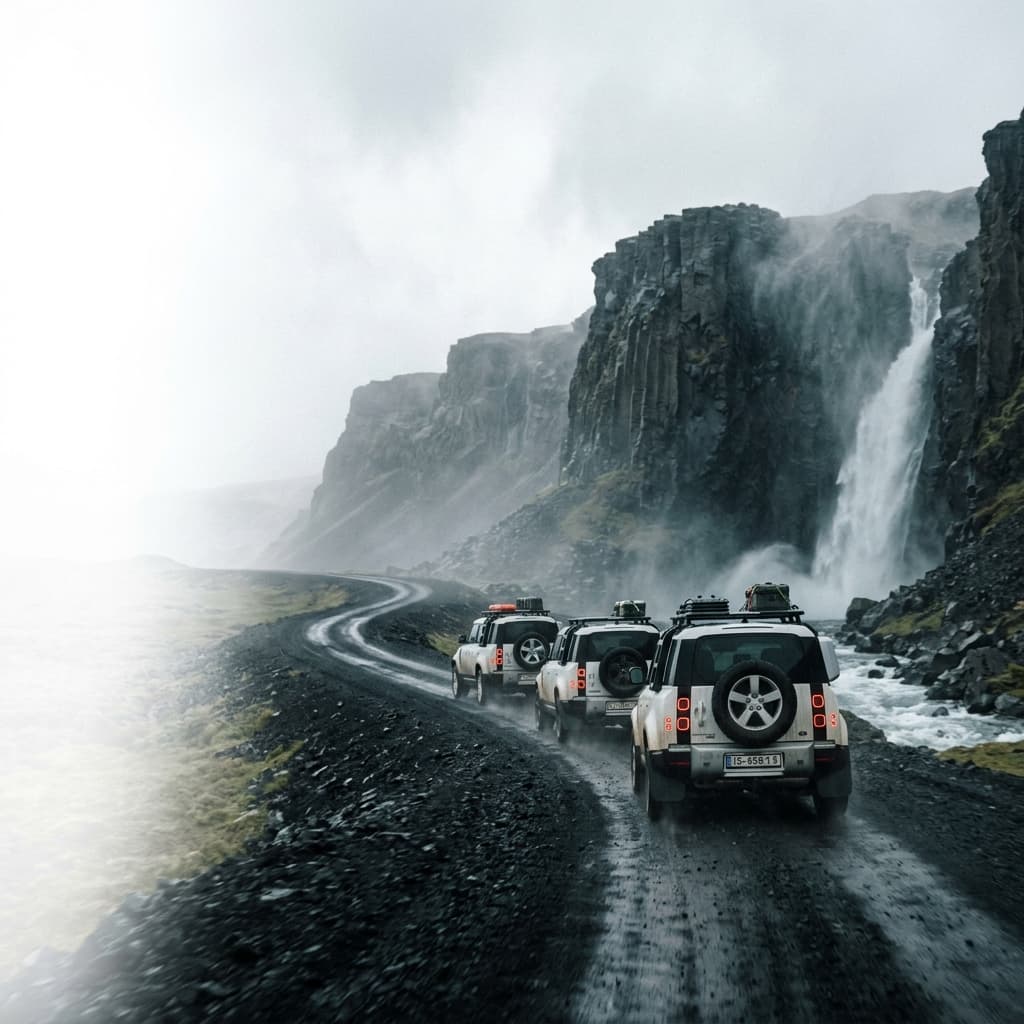
Yes, winter driving in Iceland is safe only if you drive a studded-tire 4x4 vehicle, monitor real-time wind and snow alerts on Road.is hourly, and possess winter driving experience. Convoy travel is highly recommended to ensure you have lead guides navigating storm fronts.
Fast Facts & Reference
The Realities of Icelandic Winter Driving
Winter in Iceland brings icy roads, gale-force winds, snowstorms, and very limited daylight. While driving under the Northern Lights is incredibly magical, it presents real hazards. Safety relies on three pillars: checking road conditions daily, driving a studded-tire 4x4, and knowing when to pull over.
Why Studded Tires are Mandatory
Between November and April, driving on standard tires is extremely dangerous. Studded winter tires are necessary to provide grip on black ice—a transparent layer of ice that forms on asphalt and is invisible to drivers.
How to Read the Weather Forecasts
Before leaving your accommodation, you must check SafeTravel.is and Road.is. Iceland uses a color-coded warning system for wind and visibility. If a yellow or orange alert is issued for a region, you must stay in place. Do not attempt to drive through storm fronts.
“Black ice is the silent danger of winter roads. Studded tires are the single most important safety feature on our Iceland convoys.”
— KarunaDarshan, Expedition Lead